2 hr 30 min
Bo-Kaap Malay Cooking Class & Lunch
Master Cape Malay dishes in a local home amid Bo-Kaap's vibrant streets and colorful heritage.
Reserve
Hand-picked by our editors — only the best 4 cooking experiences from 12 reviewed
Verified partners for every tour, free cancellation where available, and instant confirmation on every booking.
2 hr 30 min
Master Cape Malay dishes in a local home amid Bo-Kaap's vibrant streets and colorful heritage.
Reserve
4 hr
Explore vibrant cobbled streets, then cook and feast on Cape Malay curry in a local home
Reserve
5 hr
Cook authentic Cape Malay dishes with a local family after exploring Bo-Kaap's vibrant streets
ReservePrices from verified partners. Availability updates in real time at checkout. Free cancellation policies apply where shown.
The landmarks, rooms, and views travelers on this tour remember — all visible on a single visit.
Enjoy panoramic vistas of the city and harbor from the slopes near your bo kaap malay cooking class.
Visit the oldest mosque in South Africa, established in 1804, near the bo kaap malay cooking class route.
Learn about the 19th-century Muslim family lifestyle in this heritage landmark.
Admire the iconic multi-colored homes that define the neighborhood's unique architectural history.
The cooking class provides a tactile culinary immersion, whereas the walking tour serves as a broader introduction to local heritage; most visitors choose the former for hands-on skills or the latter for comprehensive area context.
| Feature | Top pick Malay Cooking Class | Cultural Walking Tour |
|---|---|---|
Primary focus |
Cape Malay spice and recipes | Neighborhood history and architecture |
Time commitment |
3–4 hours | 1.5–2 hours |
Skill development |
Active cooking instruction | Observation of local life |
Cultural depth |
Deep dive into culinary traditions | Overview of community landmarks |
Group size |
Small private or semi-private groups | Small to medium sized walking groups |
Accessibility |
Indoor kitchen environment | Outdoor walking through sloped streets |
| See tickets → |
Verdict: Select the bo kaap malay cooking class tour if you want to master authentic Cape Malay recipes, while the walking tour is superior for travelers prioritizing the architectural and social narrative of the district.
Choose your ticket, select your date, and reserve in under two minutes. Secure checkout handled by our verified partner.
Instant confirmation by email, with a mobile voucher you can save offline. No printing, no queuing at a collection desk.
Arrive at the entrance, show your voucher on your phone, and walk in. Most tickets include priority or skip-the-line access.
Practical details for your visit straight from our verified partners — hours, access, rules, and how to get there.
100 Wale Street, Bo-Kaap
Across from the Bo-Kaap Museum
Direct to Wale Street is the most convenient method.
MyCiTi bus stops are located near the city center.
Casual and comfortable clothing is recommended for the bo kaap malay cooking class as you will be walking through the neighborhood and standing in a kitchen.
Keep belongings minimal. The bo kaap malay cooking class takes place in residential settings, so large luggage should be left at your accommodation.
Photography is generally welcomed during your bo kaap malay cooking class tour, but always ask your host before taking pictures inside private homes.
Many historic homes in Bo-Kaap have stairs and narrow doorways, which may limit access for some mobility aids during a bo kaap malay cooking class.
Mobile phones are permitted for capturing memories of your bo kaap malay cooking class, but please remain attentive during culinary demonstrations.
The bo kaap malay cooking class is a culturally enriching experience; check individual provider policies regarding age requirements for hands-on participation.
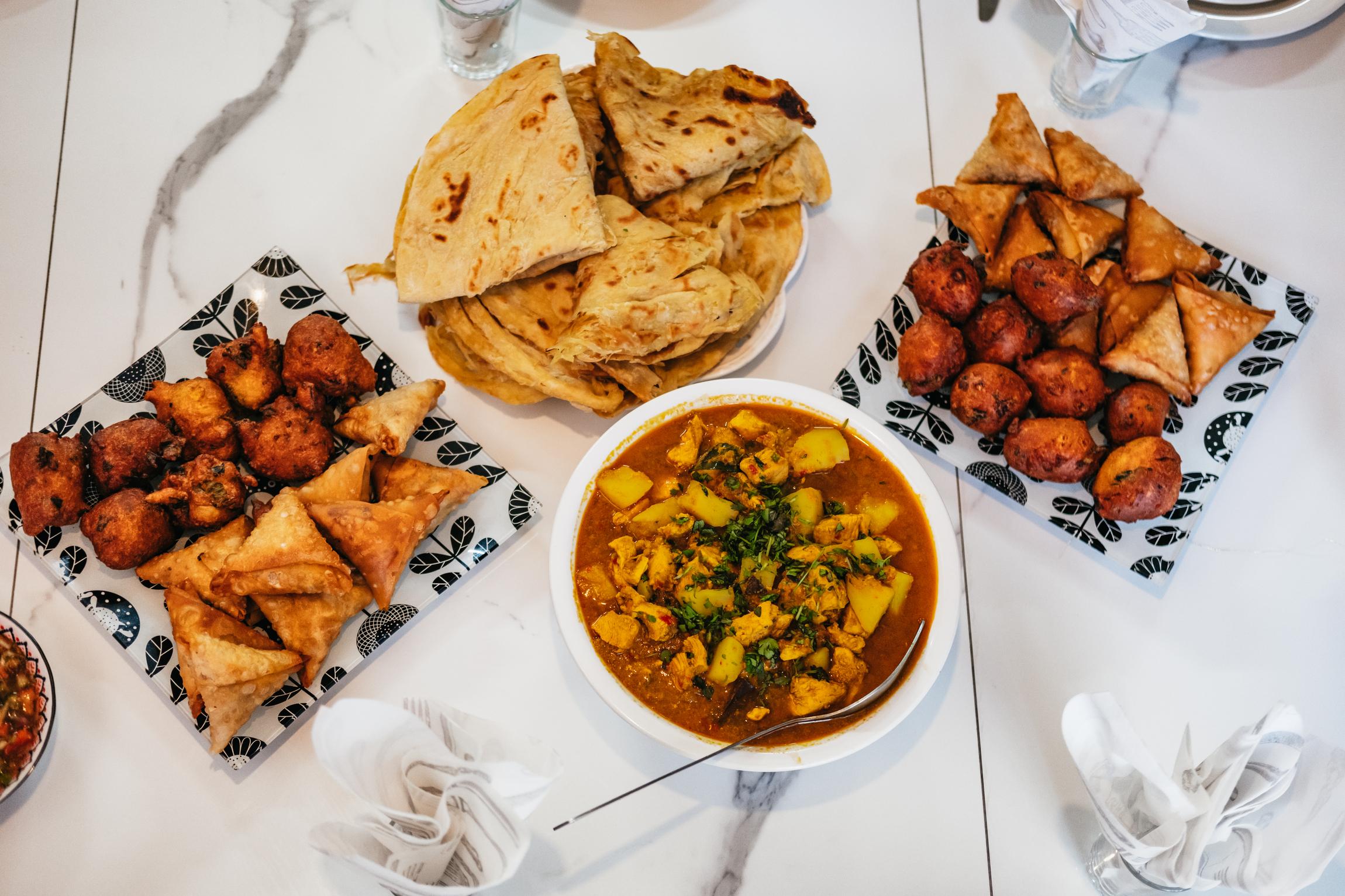
The bo kaap malay cooking class includes a meal, typically featuring traditional dishes like samosas, roti, and chicken curry.
Pets are not permitted inside the private homes hosting the bo kaap malay cooking class.
The bo kaap malay cooking class offers a deep dive into local heritage, often starting with a guided walk through the colorful neighborhood landmarks.
Best time to go, insider tips, nearby landmarks, and the cancellation fine print — flip through to skim what matters to you.
How crowds, weather, and events shift across the year.
December to February offers warm, dry weather perfect for walking tours before your bo kaap malay cooking class.
March to May provides mild temperatures and fewer crowds for an authentic bo kaap malay cooking class tour.
June to August is cooler; indoor cooking sessions are excellent for this season.
September to November is pleasant and vibrant, ideal for photography-focused bo kaap malay cooking class tickets.
Small details that turn a good visit into a great one.
Popular sessions for the bo kaap malay cooking class fill up quickly during peak seasons.
Engage with your host during the bo kaap malay cooking class to learn more about spice blends like masala.
Bo-Kaap is a residential area; keep noise levels low while walking to your bo kaap malay cooking class.
Non-bookable sights within a short walk — free to visit, easy to pair.
Explore the history of the early Muslim community in Cape Town.
Flexible, no hidden fees.
Please review specific booking terms at the time of purchase for the bo kaap malay cooking class. Refunds are subject to the operator's policy regarding the 0 ZAR entrance fee and service costs.
Hand-picked options within walking distance — pick a district for vibe, or a specific hotel for convenience.
Modern apartments near the city center.
Cape Malay cuisine arrived in the mid-seventeenth century aboard Dutch East India Company vessels, carried by enslaved and political exiles from Java, Bengal, and the Malay Archipelago who brought with them turmeric, cardamom, cinnamon, and recipes that would reshape South African tables. By 1750, kitchens in what is now Bo-Kaap were layering Indonesian rendang techniques with Cape produce — snoek instead of mackerel, apricots in place of tamarind — creating a culinary grammar that belongs nowhere else on earth. The district's steep cobbled lanes, painted in jewel tones since the 1990s, house families whose grandmothers still grind masala by hand and whose recipe books exist only in oral transmission, each household guarding slight variations in the ratio of fennel to coriander or the sequence in which onions meet ginger. Today, bo kaap malay cooking class experiences offer the rarest form of cultural access: admission to private kitchens where bredie, bobotie, and koesisters are prepared not for commerce but for family, with hosts who learned these methods as children and who correct your knife angle with the same directness their aunts once used. The cooking is unhurried — a proper tomato bredie simmers for ninety minutes, and no shortcut replicates the texture of roti rolled thin enough to read through — but the pedagogy is rigorous. You will learn why the spice blend for bobotie must rest overnight, why the curry leaves go into cold oil, and how the sugar syrup for koesisters must be ice-cold while the dough fries hot. These are not recipes designed for weekly rotation in a Western kitchen; they are culinary anchors, dishes that mark Eid and Ramadan and family reunion, and the classes treat them accordingly. The neighbourhood itself remains a working residential quarter, not a heritage park. Children play soccer against walls painted fuchsia and turquoise, the call to prayer from the Auwal Mosque — South Africa's oldest, founded in 1794 — drifts over slate roofs, and the scent of frying koeksisters competes with woodsmoke from morning braais. Bo-Kaap's culinary traditions survived apartheid-era forced removals that displaced thousands of families in the 1960s and 1970s, and the recipes you learn in a bo kaap malay cooking class tour carry that resilience in their structure: they are forgiving of substitution when ingredients are scarce, built to feed extended families from a single pot, and designed to be taught by demonstration rather than written record. The district's 350-year-old food culture is now under different pressure — gentrification and Airbnb conversions have pushed property values beyond the reach of many long-term residents — which makes the culinary knowledge transfer happening in these kitchens both culturally urgent and historically significant, a living archive maintained one rolling pin and one hand-ground spice paste at a time.

"These are not recipes designed for weekly rotation; they are culinary anchors, dishes that mark Eid and family reunion."
A step-by-step walkthrough of the visit — what you'll see, how long each stage takes, and the details that matter.
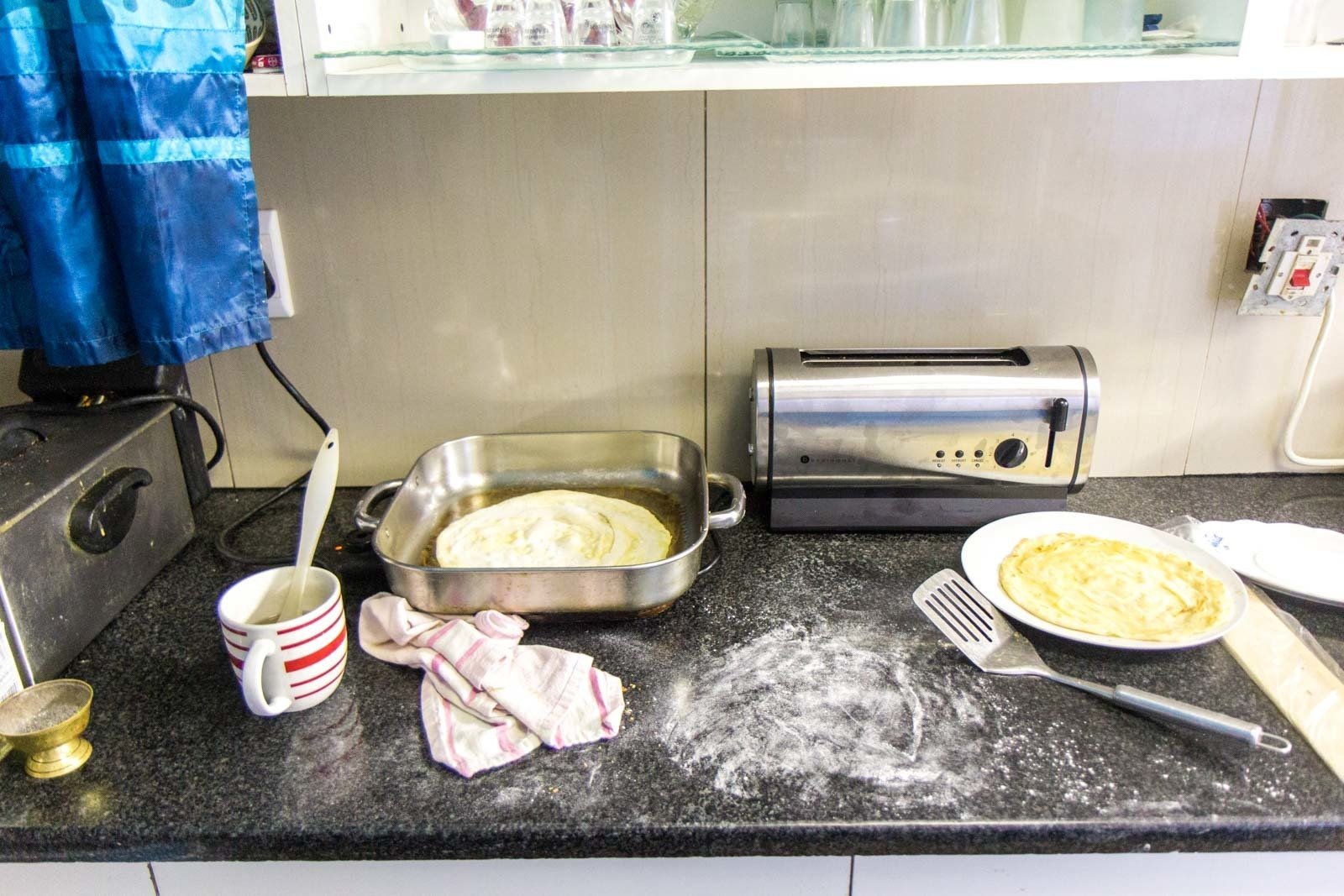
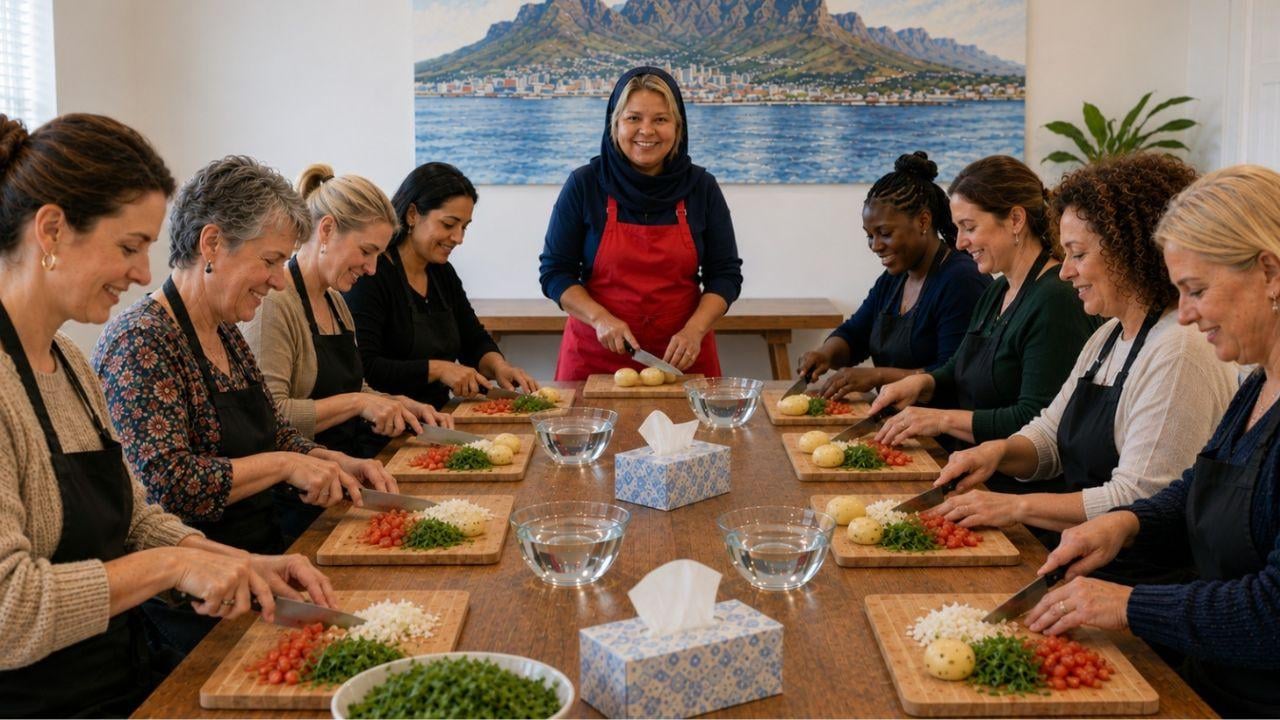
You arrive mid-morning at a pastel-painted row house on Wale Street, where your host — often a third- or fourth-generation Bo-Kaap resident — greets you in a tiled kitchen fragrant with cinnamon and star anise already toasting in a dry pan. The table holds pyramids of fresh coriander, ginger root the size of your palm, and a dozen small bowls of spices you will grind, bloom, and layer over the next three hours. You start with roti dough, kneading until the gluten develops, then set it to rest while you learn the foundational curry base: onions softened until they lose all bite, garlic and ginger pounded to paste, spices added in a sequence that matters more than you expect. The main dish varies by class — bobotie with its sweet-savoury custardy top, a slow-cooked lamb bredie, or chicken curry fragrant with dried apricots and almonds — but the method is consistent: build flavour in stages, taste constantly, and resist the urge to rush. Your host corrects your stirring technique, explains why the pot must be heavy-bottomed, and shares the small adjustments her mother made to her grandmother's recipe. While the curry simmers, you roll roti thin and watch them puff on a hot griddle. You fry koeksisters if time permits, plaiting the dough and plunging it into syrup so cold it crackles. Then you sit, sometimes on a narrow balcony overlooking Table Mountain, and eat what you have made, served family-style with sambals and atchar your host prepared earlier. The meal is generous, the conversation unhurried, and you leave with printed recipes and the sense that you have been briefly adopted rather than merely instructed.
The bo kaap malay cooking class operates daily from 10:00–17:00, excluding Fridays and Sundays.
Accessibility varies by home; please verify specific venue details for your bo kaap malay cooking class.
Yes, you can take photos during your bo kaap malay cooking class, but respect the host's privacy.
Book your bo kaap malay cooking class tickets in advance to secure your spot during the 10:00–16:00 arrival window.
Bring comfortable shoes and a camera for your bo kaap malay cooking class tour.
Most classes welcome families, but check specific age requirements before booking your bo kaap malay cooking class.
Many hosts can accommodate preferences; mention them when booking your bo kaap malay cooking class.
The meeting point for the bo kaap malay cooking class is typically in the Bo-Kaap area, accessible via taxi or walking.